
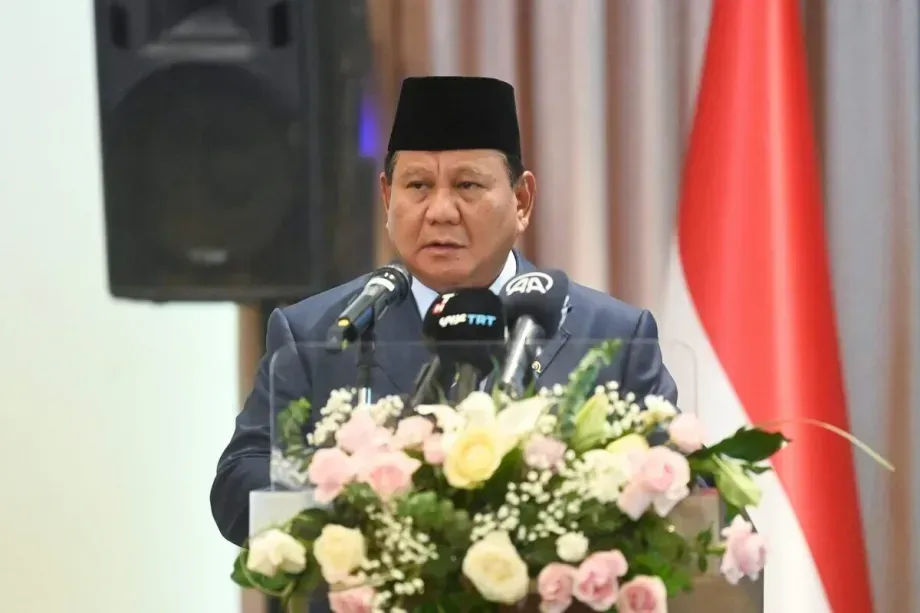
On 1 August, at a business forum in Jakarta, President Prabowo Subianto told a room of executives that Iran already has nuclear weapons, and that a chain reaction was underway across the region. His exact words, as reported, were: “It is said that Iran already has nuclear weapons. Now Saudi Arabia wants one too. If Saudi Arabia wants nuclear weapons, it’s possible the UAE will also want them, Qatar will also want them, Egypt will also want them.” He named no source and offered no evidence — a head of state speculating about the world's most dangerous weapons without checking his starting premise.
The premise is false, and checking it takes ten minutes. Iran belongs to a treaty that bans it from building nuclear weapons and permits only peaceful uses of the atom. IAEA inspectors have checked its facilities many times and always found a civilian programme. Even during the twelve-day war with the US and Israel earlier this year, the agency's head said again there was no sign of a weapon being built. Decades ago, Iran's founding religious leader banned weapons of mass destruction under Islamic law, and that ban still stands. What Prabowo repeated was not Indonesian intelligence but an echo of a claim the US and Israel have pushed for years to isolate Iran — one that outlasted the failed 2018 nuclear deal and hardened after this year's war.
What compounds the error is who this president has chosen to be. Last September, Prabowo stood at the UN General Assembly and offered twenty thousand Indonesian peacekeepers for Gaza — a moment that cast the world's largest Muslim-majority nation, a country with no diplomatic relations with Israel, as the region's indispensable bridge-builder. And in January 2025 he brought Indonesia into BRICS as a full member — a bloc in which Jakarta now sits alongside Iran, Saudi Arabia, the UAE and Egypt: four of the five countries he has just written into a nuclear arms-race scenario. A reputation as a precise, sympathetic voice on Middle East affairs rests on precision. A false claim about the nuclear programme of Iran — one of the most committed state backers of the Palestinian cause — tells the region that Prabowo's grasp of its politics may be thinner than his rhetoric on Palestine suggests.
The countries he named will read it their own way. Saudi Arabia, the UAE and Qatar are three of Indonesia's most important Gulf partners, and all have spent two years quietly repairing ties with Tehran. Saudi Arabia and Iran restored diplomatic relations in 2023, and Gulf governments have largely avoided endorsing the bomb narrative even while staying wary of Tehran. A president publicly assigning them nuclear ambitions just as they are trying to move past that storyline looks like someone who has not opened the file.
None of this puts Iran beyond criticism, or nuclear weapons in the region beyond debate — Israel's own undeclared arsenal, tellingly, never draws this kind of urgent attention. But a head of state does not get to guess at such things in a region still absorbing a war's aftershocks and expect it to cost him nothing.
Iran's embassy in Jakarta answered within a day: Tehran has never pursued nuclear weapons and never will, and Ambassador Mohammad Boroujerdi added that Iran's resilience during this year's war had already answered the question without needing a warhead to do it. Prabowo was corrected in public by the very embassy his remarks had put on the spot. Ten minutes with the IAEA's public reports would have stopped this before it started. The failure to check is his alone, and it will not be forgotten quickly: every future statement he makes on Iran, Saudi Arabia or the wider Middle East will now be read against this one. Credibility in foreign policy takes years to build and one afternoon to spend.