Extreme heat reshapes French property market, tourism and daily life
The exceptional heat experienced across France this year is fundamentally changing patterns of residence, tourism and property investment, as citizens seek refuge from temperatures that have claimed thousands of lives and destroyed vast areas of land.
Beginning on May 22, 2026, record-breaking temperatures 10 to 15 degrees Celsius higher than normal swept across the country, breaking all-time records for the hottest May and springtime on record. The June heatwave alone caused an estimated 2,700 heat-related deaths, making it one of the deadliest such events since the catastrophic 2003 heatwave that killed over 15,000 people.
Climate risks drive property decisions
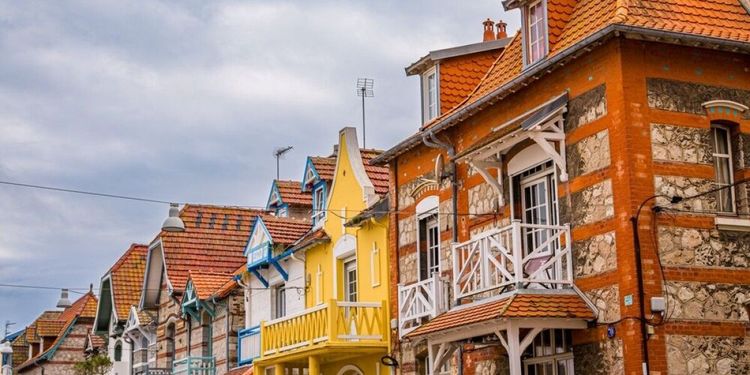
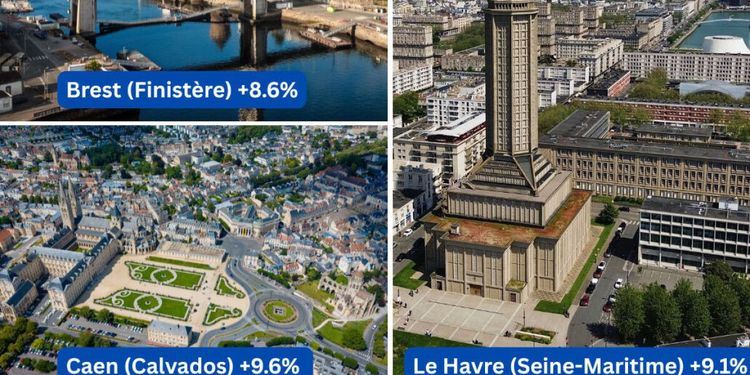
Property group Foncia reports that buyers are increasingly factoring summer temperatures into their location decisions. The Breton and Norman coasts, portions of the Vendée coastline and mountain communes are experiencing rising interest as a result of their cooler climates.
The company warns that ski resort property values could decline if shorter winters reduce the viability of the ski season. It advises buyers to consider climate risks including coastal erosion and flooding along exposed Atlantic shores, extreme heat, wildfires and drought in the Mediterranean, and damage from shrinking and swelling clay soils.
A survey by property website Leboncoin of 1,752 users found that one in three had considered relocating, or would do so if heatwaves intensify further. Many identify the Breton, Norman or Atlantic coasts as potential refuges from extreme heat.
Summer comfort becomes key criterion
Analysis shows that approximately 48% of French homes are classified as insufficient for summer comfort in their DPE energy performance ratings, with nine out of ten homes not adequately adapted to resist heat without air conditioning.
Property website PAP advises buyers to prioritise design features that improve comfort during hot weather. North-facing façades, east-facing bedrooms, shutters, blinds, shaded gardens and internal courtyards can all help keep homes cool, while features such as patios, basements and ponds are increasingly valued.
Some properties are now being described as bouilloires thermiques (thermal kettles), mirroring the term passoires thermiques (thermal sieves) used for poorly insulated homes. Since 2021, DPE certificates have included a smiley face indicator for summer comfort, though this does not affect the overall A-G energy rating. The government is considering introducing a separate summer comfort rating.
Interest in air conditioning has surged. From July 18, 2026, certain reversible units qualify for a reduced 5.5% VAT rate instead of 20%. The measure applies to fixed air-to-air heat pumps with rated output of 12 kilowatts or less that meet energy efficiency criteria: A++ rating for mono-split systems or A+ for multi-split systems. The Housing Ministry estimates this will save households several hundred euros.
Installing fixed units in apartment buildings requires approval from the copropriété and, in some cases, the mairie.
Property website Bien'ici reports growing interest in homes with swimming pools as residents seek ways to cope with heat.
Holiday patterns shift northward
Air conditioning and swimming pools have become essential for holiday rental customers this year, according to PAP. Bookings have increased in cooler areas, particularly northern Manche (up 24.4%), while declining on the Riviera (down 7.8%) and in Corsica (down 4.2%). Many holidaymakers view southern destinations as too expensive given heatwave risks and properties that are not always air-conditioned.
Record wildfires devastate countryside
The hot summer has produced unprecedented wildfire destruction. By late July, fires had scorched more than 160,000 hectares (about 617 square miles), making them the largest on record for France. France has experienced multiple consecutive heatwaves in 2026, with the third wave drying out the landscape to such an extent that ignitions escalated into exceptionally severe fires, according to wildfire experts.
The fires generated pyrocumulonimbus effects, or fire thunderstorms, which created lightning and started additional blazes. This extremely rare phenomenon had never before been observed in France, though it has occurred in North America and Australia. More than 300,000 people were evacuated from their homes in France and Spain during the July wildfires, marking one of the largest evacuations in French history.
The 2026 season follows Europe's worst wildfire year on record in 2025, when more than one million hectares burned across the European Union. The 20-year average through 2025 stands at about 388,000 hectares annually.
Waterways reach critical lows
The heat has severely affected France's waterways. All major rivers recorded low water levels, though the main navigable freight routes, the Seine and the Rhine, remained open to river traffic.
The Office français de la biodiversité estimates that 25% of streams had dried up by the end of June. The organisation noted that the intensity of the phenomenon in some regions was particularly striking and foreshadows significant consequences. The worst affected departments include Creuse, Deux-Sèvres, Loire, Vendée, Côte-d'Or, Cher, Aveyron and Allier.
Long-term projections point to continued warming
Summer temperatures in France are projected to increase by approximately 2.5 to 3.5 degrees Celsius for the period 2041-2070 compared to the reference period of 1961-1990, with southern France expected to experience the largest increases.
Adapting the country to more frequent extreme heat has become a health, social and organisational emergency, according to the Haut commissariat à la stratégie et au plan, an advisory body to the government. It says France must develop more shade, green spaces, bathing areas and buildings better adapted to heat.