
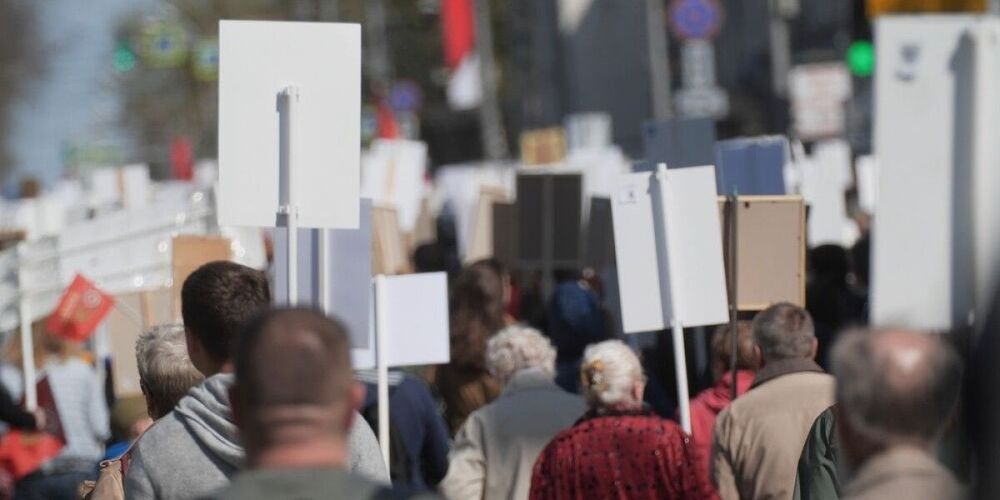
CGT calls for nationwide public-sector strike on September 29 over pay and conditions
Residents across France could face widespread disruption to public services on September 29, as the CGT trade union calls on public-sector workers to down tools in protest over pay freezes and deteriorating working conditions.
The CGT (Confédération générale du travail), which represents approximately 640,000 to 690,000 members and is France's largest union in terms of Labour Court election votes, is targeting the country's 5.9 million public-sector employees - representing around one in five French workers. The scale of participation will determine whether essential services grind to a halt or merely slow down.
Sophie Binet, who became the union's first female Secretary General when elected in March 2023, renewed the strike call during a September 1 interview on France 2, describing September 29 as the culmination of industrial action planned throughout the month.
"I call on all the public-sector workers listening to me to go on strike," she said, adding that the aim was to demonstrate to critics of civil servants "what a black day without public services" would look like.
Pay freeze at heart of dispute
The union's grievances centre on what it describes as collapsing purchasing power among public-sector workers. The public-sector pay index point - the basis for calculating civil service salaries - has remained frozen at €4.92 per month since July 1, 2023, with no increase announced for 2026. This follows a pattern of lengthy freezes, including periods from 2010 to 2016 and 2017 to 2022.
According to CGT calculations, public-sector workers have lost 28.6% of their purchasing power since 2000 due to insufficient increases in the pay index. The union is demanding a minimum 10% increase to the index point.
While the government did implement a 1.5% increase on July 1, 2023, following a 3.5% rise in July 2022 - the largest single increase in over thirty years - unions argue these adjustments have failed to keep pace with inflation and the rising cost of living.
Budget timing fuels tensions
The timing of the strike is significant. The French government is currently preparing its 2027 budget, which must be presented to Parliament by early October according to constitutional requirements and adopted before December 31, 2026.
Binet criticised plans for further savings on sick leave, including measures that could reduce payments to workers who are off sick.
"We have to stop this persecution of sick people," she said, arguing that rising sick leave should be tackled by examining working conditions rather than cutting benefits.
She claimed that one worker in two shows signs of psychological distress at work and that one in three says they are close to burnout. The union leader called for action to prevent what she described as "a regressive budget" for workers.
Potential impact on daily life
The exact disruption will depend on participation rates and which sectors join the action. Schools and nurseries could face closures or reduced staffing if teachers and support staff strike. Local authority services including canteens, leisure facilities and childcare provision may operate on limited schedules or close entirely for the day.
Government offices such as tax centres and public advice bureaux could run with skeleton staff or shut their doors. The broader context of September mobilisations also includes planned strikes affecting transport, aviation, healthcare, firefighters and the energy sector at various points throughout the month.
Residents are advised to avoid scheduling appointments with public services on September 29 where possible. Those with existing appointments should confirm closer to the date that services will be operating as normal.
With France employing 91 public-sector workers per 1,000 inhabitants - a relatively high ratio compared to other developed countries, though lower than Nordic nations - the potential for widespread disruption is considerable. Public-sector employment increased by 0.6% from 2023 to 2024, adding 32,800 workers to the civil service rolls.