Summer burglaries surge 8% in France: how to protect your home
Homeowners across France are being warned to strengthen security measures after burglaries rose by nearly 8% in July compared to the same month last year, according to new Interior Ministry figures.
The country recorded 27,648 burglaries in July 2026, including both residential and commercial properties—an increase of 1,519 incidents compared to July 2025. When examining residential properties alone, the rise was even steeper at 7.7%.
Despite this summer spike, the figures represent part of a longer downward trend. France recorded approximately 218,200 domestic burglaries in 2024 and provisional figures showed around 212,000 in 2025—a significant decrease from over 250,000 burglaries in 2016.
The Interior Ministry acknowledged that official statistics may underestimate the true scale, as not all victims report crimes to authorities.
Regional concentration and urban vulnerability
Burglary risk varies dramatically across France, with more than half of all incidents concentrated in just three regions: Île-de-France accounts for 26.3% of burglaries, followed by Auvergne-Rhône-Alpes at 15.8% and Provence-Alpes-Côte d'Azur at 10.5%. These regions contain France's largest urban centers—Paris and its suburbs, Lyon, Marseille, and Nice.
The disparity between urban and rural areas is stark. Towns with fewer than 5,000 residents experience an average of 5 break-ins per 1,000 homes annually, while cities with populations between 200,000 and 2,000,000 see rates of 8-9 break-ins per 1,000 homes.
Some departments have seen particularly sharp increases. The Dordogne recorded a 26% rise in burglaries between 2024 and 2025.
Jewellery and precious metals were particular targets this year.
Peak timing and methods
July and August, along with December, consistently see the highest burglary rates in France. Data from security firm Verisure analyzing alarm activations in 2025 showed December was the worst month at 10.3% of annual total triggers, followed by July and August at 8.9% each—periods when homes stand empty during holidays.
Most burglaries occur between 2 PM and 6 PM and typically last less than 10 minutes, according to insurance industry data. Around 70% of burglars still enter through front doors rather than windows.
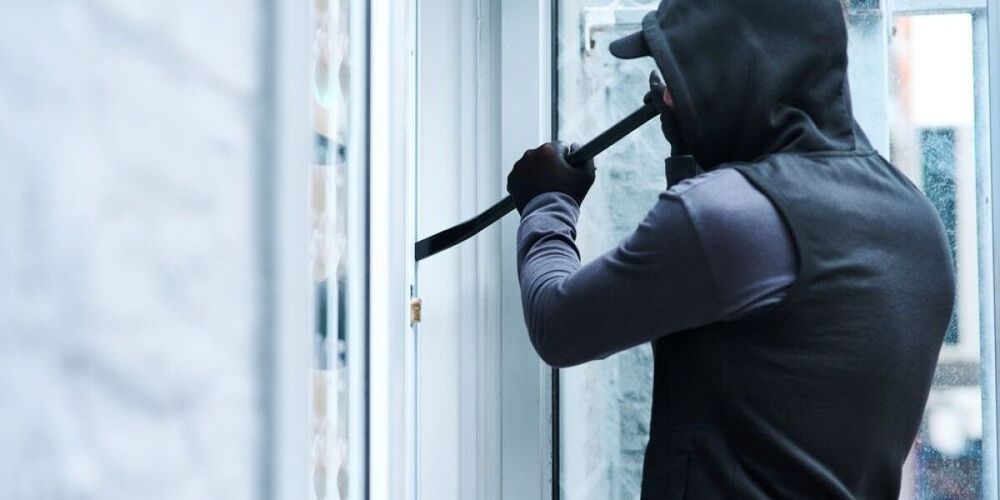
Thieves employ various tactics beyond forced entry. Some pose as officials from utility companies, postal workers, firefighters, or even police officers to gain access. Others use reconnaissance techniques, such as placing letters on doormats or toothpicks in locks—if these remain undisturbed for days, they know the property is vacant.
Free police surveillance programme
Authorities strongly encourage residents to register for the Opération Tranquillité Vacances (OTV) service, which provides free police or gendarme patrols of properties while owners are away. Created in 1974 initially for summer vacation surveillance, the programme was expanded in September 2009 to cover all school holiday periods throughout the year.
The service has proven effective: during summer 2010, the Interior Ministry reported that less than 1% of homes registered with OTV were burglarized.
Registration can be completed online or in person at local stations, but must be done between 45 and three days before departure (or one day for gendarmerie stations). Proof of address and identification may be required.
However, availability differs by location. Only gendarmerie units offer the service for second homes, meaning those closer to police stations than gendarmerie posts cannot access surveillance for secondary properties.
Securing your property
Strong physical security remains essential. Doors should be reinforced with multiple locks, including sliding bolts or advanced mechanisms such as steel snap-resistant cylinder locks. Installing higher fences, shutters, and securing sliding doors can limit access through windows and rear entrances.
French home insurance policies typically require minimum security measures—such as reinforced front doors (porte blindée), three-point locks with A2P rating, locked windows, and activated alarm systems when leaving. Failure to comply with these requirements can void burglary claims.
Alarms should be activated even for brief absences. Security cameras are recommended, provided they do not overlook public areas.
During the current heatwave, residents face additional risks. Many spend evenings outdoors to escape warm interiors, potentially leaving homes vulnerable. Those who leave windows open overnight for ventilation may also lose insurance coverage and create entry points for thieves.
Minimizing detection of absence
Homeowners should keep holiday plans private to limit who knows properties will be empty. Neighbours can be asked to collect mail regularly and check for telltale signs like letters on doormats.
Automatic light switches or smartphone apps can turn devices on periodically each evening, creating the appearance of occupancy.
Insurance considerations
Coverage against burglaries is not automatically included in all French home insurance policies. Homeowners must verify with their insurance company that they have theft protection, particularly for properties that remain unoccupied for extended periods.
Victims must act quickly if burgled. French insurance law Article L113-2 paragraph 4 of the Code des assurances requires filing a police report and notifying insurers within exactly two working days of discovering a burglary. Missing this deadline can jeopardize claims.
Complaints can be filed with police both online and in person following a burglary.