What the recent wildfires mean for people seeking insurance in France
France is experiencing its most devastating wildfire season on record, with nearly 100,000 hectares burned nationwide as of late July according to the European Forest Fire Information System. The unprecedented scale of destruction is forcing the insurance industry to reassess risk and pricing across the country.
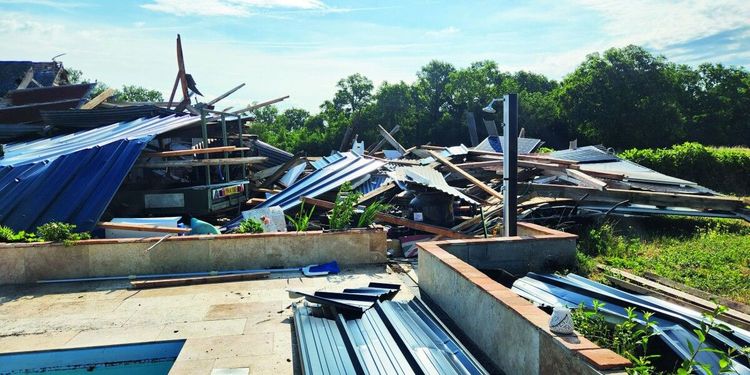
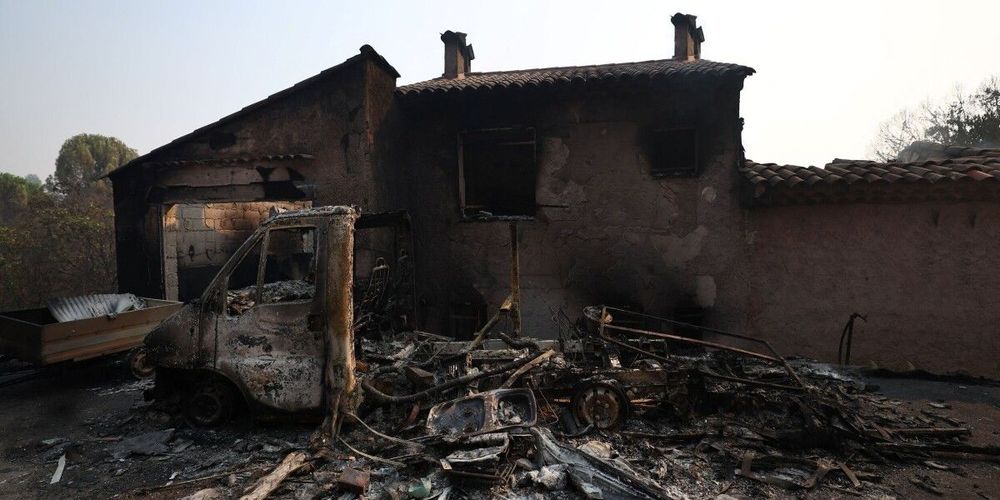
Fires remain the leading cause of home insurance compensation in France, accounting for over €2.2 billion in payouts last year—28.7% of total claims according to industry body France Assureurs. This year's ongoing wildfires have destroyed tens of thousands of hectares and hundreds of properties, with significant financial consequences for homeowners in affected areas.
Insurance premiums rising sharply in fire-prone regions
Home insurance costs are climbing nationwide, with French residents now paying an average of €310 annually compared to €274 last year—a 13% increase, according to the 2026 Assurland Barometer. The rises are steepest in regions most vulnerable to fire and weather-related disasters.
Olivier Moustacakis, managing director of insurance comparison site Assurland.com, confirmed that premiums will continue climbing.
The claims rate is increasing every year, but there are also external factors such as geopolitical situations and the rising cost of materials.
Occitanie (€346, up 13.9%), Nouvelle-Aquitaine (€332, up 20.2%) and Provence-Alpes-Côte d'Azur (€331, up 4.6%) now rank among the most expensive regions to insure. Brittany remains the cheapest at €244 annually.
Gironde fire among France's worst since World War II
The Gironde wildfire alone burned approximately 42,000 hectares, making it the second largest area devastated by a single wildfire in France since World War II. More than 220,000 people were evacuated from the region in what became the largest single wildfire evacuation France has faced in years.
The blaze exhibited extremely rare behaviour for France, creating a pyrocumulonimbus effect—essentially a fire thunderstorm that generated its own lightning and started additional fires. This phenomenon, more common in North America and Australia, had never been documented in France before.
The severity of the crisis prompted France to activate the European Union Civil Protection Mechanism on July 24, receiving aerial firefighting support from Croatia, Portugal, Czech Republic and Slovakia. Authorities also deployed Airbus A400M Atlas military aircraft as large air tankers, each capable of carrying up to 20 tonnes of fire retardant.
How to claim compensation for fire damage
Most comprehensive insurance policies include fire protection (la garantie incendie) covering damage from forest fires with no changes to deductibles. This applies to homes, businesses and vehicles, subject to policy terms and limits.
Coverage typically extends to damage from smoke, soot and firefighting efforts. Homeowners should contact insurers within five working days of an incident, though deadlines are often extended for major disasters.
For this year's fires in Gironde, Landes and Var, most insurers have extended reporting deadlines until August 31. In an exceptional measure, insurers agreed to cover temporary rehousing costs for evacuees for up to three weeks following the Gironde fire, though such provisions are not standard.
Note that premiums for comprehensive home insurance, including catastrophe naturelle (CatNat) cover, reached €15.0 billion in 2025—an 8.4% increase driven partly by the CatNat premium rising from 12% to 20% in January 2025. However, wildfires do not qualify for the CatNat scheme. Insurers explain this exclusion by pointing to the French government's finding that nine in ten wildfires are caused by human activity—including approximately 30% from deliberate arson—rather than weather patterns alone. Since summer began, 184 people have been arrested in connection with wildfires.
Documentation and assessment procedures
Minor fire damage can generally be assessed remotely, but completely destroyed properties require direct expert inspection. Moustacakis advises homeowners to take photos, preserve receipts and proof of purchase, and provide as much documentation as possible.
If you have photos of your home before and after the incident, these may also be useful to the assessors and the insurer.
For total losses, nothing should be moved or discarded until surveyors have completed their inspection, except where necessary to prevent further damage.
Prevention measures critical to reducing risk
French authorities report that in around 90% of cases where homes are destroyed by wildfire, property owners or tenants failed to carry out effective undergrowth clearance as required by law. In 52 mainland French departments with obligation légale de débroussaillement (OLD) regulations, property owners must clear undergrowth to a minimum of 50 metres from their house in wooded and forest areas by July 1 each year. Local authorities can extend this requirement to 100 metres.
Failure to comply carries serious consequences: fines up to €15,000 and one year in prison if fire spreads due to uncleared undergrowth.
Moustacakis pointed to recent fires on the outskirts of Marseille where homes that had failed to comply with clearance regulations were destroyed, while properly cleared properties remained unaffected.
Taking preventative measures can limit damage, reduce compensation costs, and prevent insurance premiums from rising so sharply year after year.
The 2026 Assurland Barometer analysed 7,580 home insurance quotes provided between January 1 and May 1, 2026.