Aix-en-Provence inaugurates France's first dedicated parking spaces for compact no-licence vehicles
Aix-en-Provence has become the first city in France to introduce dedicated parking spaces for no-licence cars, marking a significant step in accommodating the country's rapidly growing fleet of compact electric vehicles.
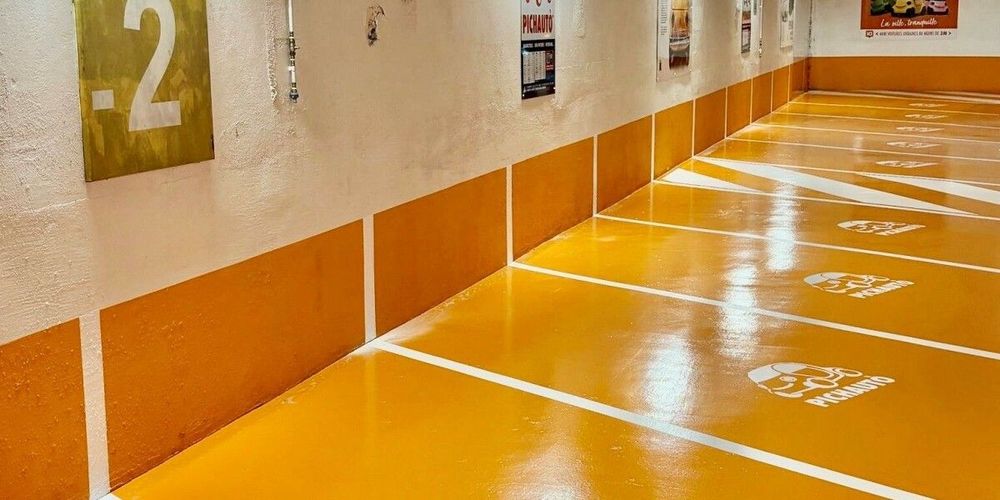
The new orange-coloured parking bays, inaugurated on June 17 at the Rotonde car park in the city centre, are reserved exclusively for vehicles measuring under three metres in length. The 1,800-space facility, which has served more than four million visitors annually since opening in May 2007, now features the distinctive spaces on its second underground level.
Urban planning group Semepa has branded the initiative around the term 'Pichautòs' – derived from Provençal language meaning small cars – rather than using the official French designation 'quadricycle léger motorisé'. The choice reflects regional identity and acknowledges that 15 percent of national no-licence car sales occur in the Provence-Alpes-Côte d'Azur region.
Growing market for compact vehicles
The parking initiative responds to surging demand for these compact vehicles, with almost 32,000 registrations recorded in France in 2024. This figure represents more than double the 2019 registration numbers, though 2025 has seen a slight decline. France now accounts for almost 50 percent of licence-free car sales across the European market, with more than 250,000 such vehicles currently on French roads.
Models eligible for the orange spaces include the Renault Twizy at 2.34 metres, the Citroën Ami at 2.41 metres, and the Fiat Topolino at 2.53 metres. The Citroën Ami has proven particularly successful commercially, selling more than 65,000 units in its first five years since launching in 2020. The Ami and Topolino share the same technical platform, both equipped with an 8 horsepower electric motor, 5.5 kWh battery, and 75-kilometre range.
Regulatory framework and restrictions
These vehicles are legally classified as light quadricycles, limited to a maximum speed of 45 km/h, maximum power of 6 kW (approximately 8 horsepower), and maximum unladen weight of 425 kg. French law prohibits them from motorways and certain dual carriageways, making them primarily suited for urban environments.
Despite their 'no-licence' designation, drivers born after January 1, 1988 must hold a BSR (Brevet de Sécurité Routière) or AM licence to operate these vehicles. Only those born before this date can drive them without any licence. The minimum driving age stands at 14 years, following a November 2014 ministerial decree that lowered the previous requirement of 16 years.
Environmental incentives
Beyond dedicated parking spaces, the Aix-en-Provence initiative offers free electric charging facilities and a 50 percent discount on monthly parking subscriptions, bringing the cost to €60 per month. Damien Bariller from Semepa explained that the measures aim to facilitate city centre access for these vehicles, which are becoming increasingly important for urban travel.
The city's commitment to sustainable transport extends beyond this project. Semepa previously introduced 'Diablines' electric tourist shuttles in the city centre, along with green-coloured parking spaces reserved for electric vehicles and dedicated areas for bicycles and cargo bikes, all equipped with charging facilities.
The Aix-en-Provence mairie stated that no-licence cars, considered more environmentally friendly than traditional vehicles, are playing an ever-greater role in urban mobility. The orange parking spaces represent a practical recognition of this trend and an attempt to integrate these compact vehicles more effectively into city infrastructure.