Impact on Beekeeping and Ecosystems
Unlike native European hornets, Asian hornets actively prey on honey bees, creating significant problems for the beekeeping industry. French beekeepers attribute approximately 29% of honeybee colony mortality to Asian hornets, with the annual economic loss to the sector estimated at €12 million. In Portugal, some beekeepers report losing up to half their hives to hornet predation.
The predatory impact is substantial: a single hornet can hunt and consume up to 50 bees daily, while one nest consumes approximately 11.3 kilograms of insects each summer. In urban environments, honeybees constitute roughly two-thirds of their diet. By late summer, individual nests can house up to 3,000 hornets, though colonies destined to overwinter may contain between 5,000 and 13,000 individuals.
The French government launched a national control strategy in March 2025, allocating €3 million in 2026 as part of a six-year plan to improve surveillance and coordinate efforts against the invasive species. Between 2006 and 2015, nest destruction alone cost France €23 million, with projected annual control costs of nearly €12 million if the species occupies all climatically suitable areas.
Geographic Distribution and Nest Density
While Asian hornets are found throughout mainland France, populations vary considerably by region. The south-west and Atlantic coastal areas generally show higher concentrations. Research indicates an average nest density of approximately one nest per square kilometre across France, though some urban areas record densities exceeding ten nests per square kilometre.
Residents can check real-time sightings in their department through online tracking systems, though actual populations likely exceed reported figures since submissions rely on voluntary public participation.
Late Summer: A Critical Period
August and September represent particularly important months in the hornet's annual lifecycle. Colonies have reached their maximum size and activity levels, while new queens are being produced ahead of winter. This makes early detection and professional removal of nests especially important before reproductive individuals disperse.
The increased colony size also elevates risks for people and pets. While individual hornets maintain consistent defensive behaviour throughout summer, the sheer number of insects in a mature nest means disturbances can provoke hundreds of hornets simultaneously. Jérémy Riand, a hornet-control specialist at Stop Frelons 85, warns that disturbing a large nest could result in 200 to 400 hornets attacking at once.
Health Risks and First Response
For most people, a single Asian hornet sting causes pain and localised swelling but does not trigger serious reactions. The primary danger comes from multiple stings or allergic responses. Analysis of envenomations between 2014 and 2023 found that 1.5% were classified as serious, with hornets responsible for 38% of serious cases despite accounting for only 25% of recorded stings.
Unlike honey bees, Asian hornets can sting repeatedly as they retain their stingers. Medical attention is essential if symptoms include difficulty breathing, swelling of the tongue or throat, dizziness, fainting or other signs of allergic reaction.
Dogs and cats face similar risks, particularly if they encounter nests in hedges, garden shelters or other accessible locations. Multiple stings or stings around the mouth and throat require prompt veterinary attention due to potential breathing complications from swelling.
Identifying and Reporting Nests
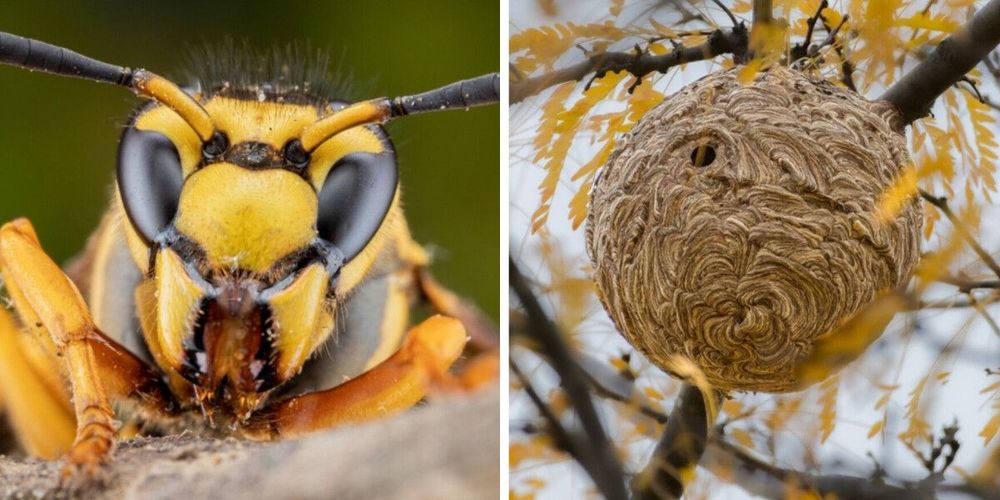
Asian hornets build nests in diverse locations including trees, hedges, roof spaces and sheds. Spring nests are small and often hidden under roof overhangs or inside outbuildings. By late summer, secondary nests grow substantially larger and typically occupy high tree locations.
The key warning sign is repeated hornet activity at a fixed point, with insects consistently entering and leaving the same location. Anyone spotting such activity should maintain distance, keep children and pets away, and report the suspected nest to their local mairie for professional removal coordination.
When performing garden maintenance, Riand advises caution:
When you have to cut hedges, you should give the hedge a big sweep with a rake while keeping your distance, to see whether anything comes out. If there is a nest, obviously you don't cut the hedge. You call a professional.
Trapping: Timing and Effectiveness
Trapping effectiveness varies significantly by season. Spring campaigns targeting emerging queens can prevent entire colonies from establishing, as capturing one queen eliminates between 5,000 and 13,000 potential hornets by summer. Some mairies distribute approved traps or offer financial assistance for purchasing them during spring campaigns.
However, late-summer trapping around homes and gardens is generally not recommended. By August and September, queens remain inside nests while workers continue foraging. Riand explains:
At this time of year, you are going to trap workers because the queens are no longer coming out of the nest. You might trap three workers, but in the nest, which shouldn't be far away, 15 more may be born.
Non-selective homemade traps also risk catching bees, butterflies and other beneficial insects. Residents should consult their mairie or local beekeeping associations for guidance on approved trap types and appropriate timing.
Professional Removal
Attempting to remove established nests without professional equipment presents serious dangers. Riand strongly advises against DIY removal once worker hornets are present, recounting cases of people hospitalised despite wearing motorcycle helmets, scarves, gloves and leather jackets after hornets penetrated improvised protective gear.
Very early in the season, when nests remain orange-sized with only a queen present, treatment with specific hornet insecticides may be technically possible. However, once workers appear, professional intervention becomes essential.
Professional removal typically costs between €90 and €200, depending on nest size and location. Ground-level nests are generally easier to address than those high in trees. Many communes cover all or part of removal costs, and some home insurance policies now include coverage up to €150 annually for Asian hornet nest removal. Residents should check with their mairie and insurance provider before arranging treatment.
For isolated hornets indoors, the priority is providing an escape route while avoiding sudden movements or attempts to crush the insect. Multiple hornets indoors may indicate a nearby nest requiring professional assessment.