France requires only one high-visibility vest per car, but more are recommended
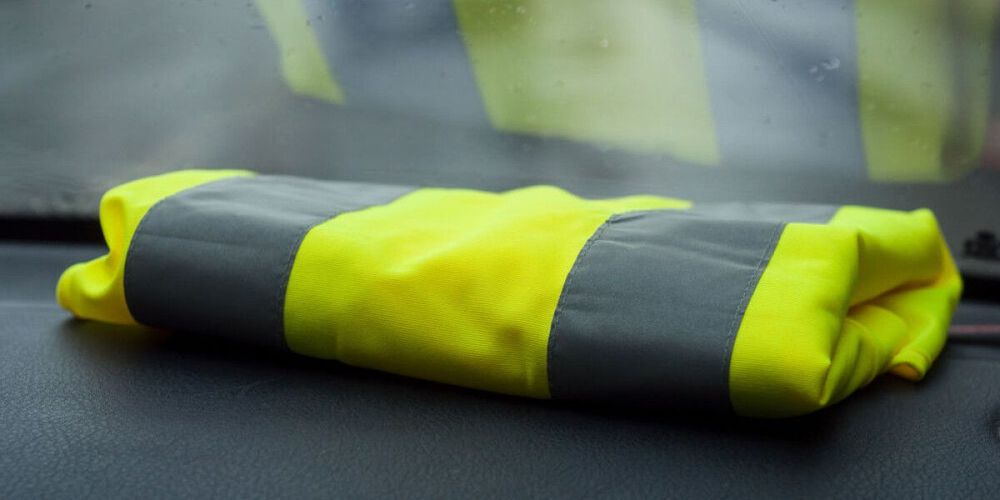
Drivers in France are legally required to keep just one high-visibility vest in their vehicle, despite widespread confusion suggesting multiple jackets are mandatory for each passenger.
The regulation, introduced on July 1, 2008, requires only the driver to wear a vest when exiting a vehicle stopped on the roadway or hard shoulder following an emergency. According to Article R416-19 of France's Code de la Route, the driver must keep this vest within easy reach while driving, typically under the seat or in the glove compartment.
Common misconceptions about passenger requirements
Many motorists mistakenly believe each passenger must have their own vest, but French law contains no such provision. Passengers who exit the vehicle during a breakdown are not legally obligated to wear high-visibility clothing, though doing so is strongly advised for safety.
The vest must conform to European standard EN 471 or its successor EN ISO 20471:2013, with visible 'CE' marking on the packaging or garment itself to demonstrate compliance. These standards specify requirements for fluorescent material and reflective strips to ensure maximum visibility.
Penalties and enforcement
Drivers caught without a compliant vest during spot checks face a €38 fine. This penalty can escalate to €135 if authorities determine the vest was absent during a roadside breakdown when it should have been worn, though the maximum fine of €750 is rarely imposed.
Studies demonstrate the critical safety value of these vests: individuals without one are typically visible from only 25-30 meters in darkness, while wearing a vest extends visibility beyond 150 meters.
Practical recommendations
Road safety experts recommend a practical approach: keep one vest accessible to the driver and store additional vests in the boot. In a breakdown situation, the driver can don their vest, retrieve the others from storage, and distribute them to passengers before anyone exits the vehicle.
Warning triangles remain another mandatory item, which must be marked E 27 R and positioned at least 30 meters from a disabled vehicle. Unlike the breathalyzer kit requirement that was removed in 2020, both warning triangles and high-visibility vests remain compulsory equipment.
Broader context and expansion
The requirement reflects broader European road safety standards, with similar regulations in Belgium, Germany, Italy, Spain, Austria, Portugal and numerous other countries, though specific rules vary by jurisdiction.
France extended the vest requirement to motorcycle and scooter riders on January 1, 2016, mandating they carry a vest in their storage compartment and wear it during emergency stops.
The regulation's importance is underscored by motorway safety statistics: in 2024, 239 people died on French motorways, accounting for about 7.5% of total road fatalities, though this represented an 11% decrease from the previous year. Earlier data showed motorway deaths had increased from 263 in 2019 to 294 in 2022, highlighting ongoing safety concerns for roadside emergencies.
The mandatory high-visibility vest gained unexpected cultural significance when it became the symbol of the gilets jaunes protest movement that emerged in November 2018. Protesters adopted the vest precisely because it was universal equipment in French vehicles, making it readily accessible to all participants.